Design, development and growth systems — customizable enough to run any kind of business online.
Free interactive tools and references — price your project, explore our work, and browse real client brand assets before you ever book a call.
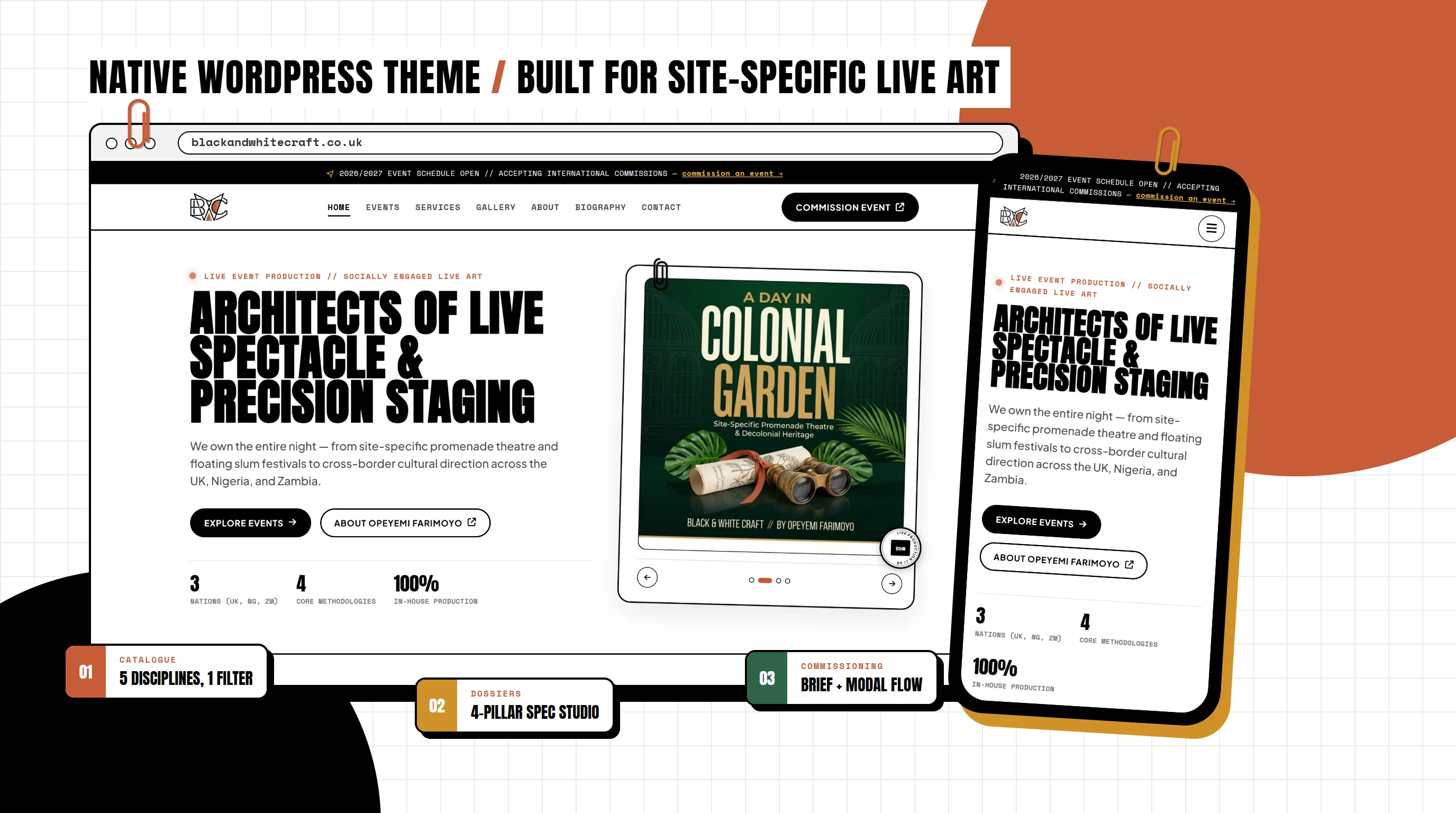
Black and White Craft is an independent live event production agency and cultural curation studio led by Artistic Director Opeyemi Farimoyo, staging site-specific theatre, socially engaged art and community festivals across the UK, Nigeria and Zambia. Cr8v Stacks built its site as a native WordPress theme and, with it, the first version of the cr8v-events-core engine that runs the production archive, the discipline catalogue and the commissioning desk.
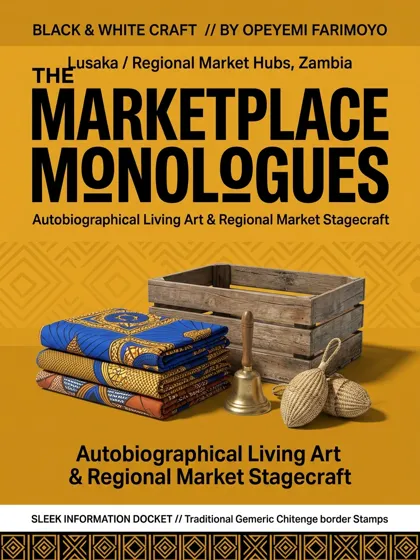
Opeyemi Farimoyo's productions happen in places a venue website never has to describe: a botanical glasshouse, the market halls of Lusaka, a floating community in Lagos. The site had to present every production as a technical dossier, let visitors browse five disciplines at a glance, and take commissions, all editable by the studio itself.
Static pages would have needed a developer for every new event, and a page builder would have put the design system at risk. Cr8v Stacks built a native theme and a companion plugin designed to be reused, so this site became the first deployment of an engine that a separate client, Red Cap Entertainment, later reused for its own identity.
Botanical and public spaces turned into performance arenas.
Festivals and community arts built with the communities they serve.
One creative line across the UK, Nigeria and Zambia.
Youth and talent elevation programmes.
Audio, lighting and rigging for non-traditional venues.
cr8v-events-core: an editable content model that any later theme can reuse.
Copy, colours and page content are edited through WordPress core's native Customizer, with a dedicated Design Tokens section.
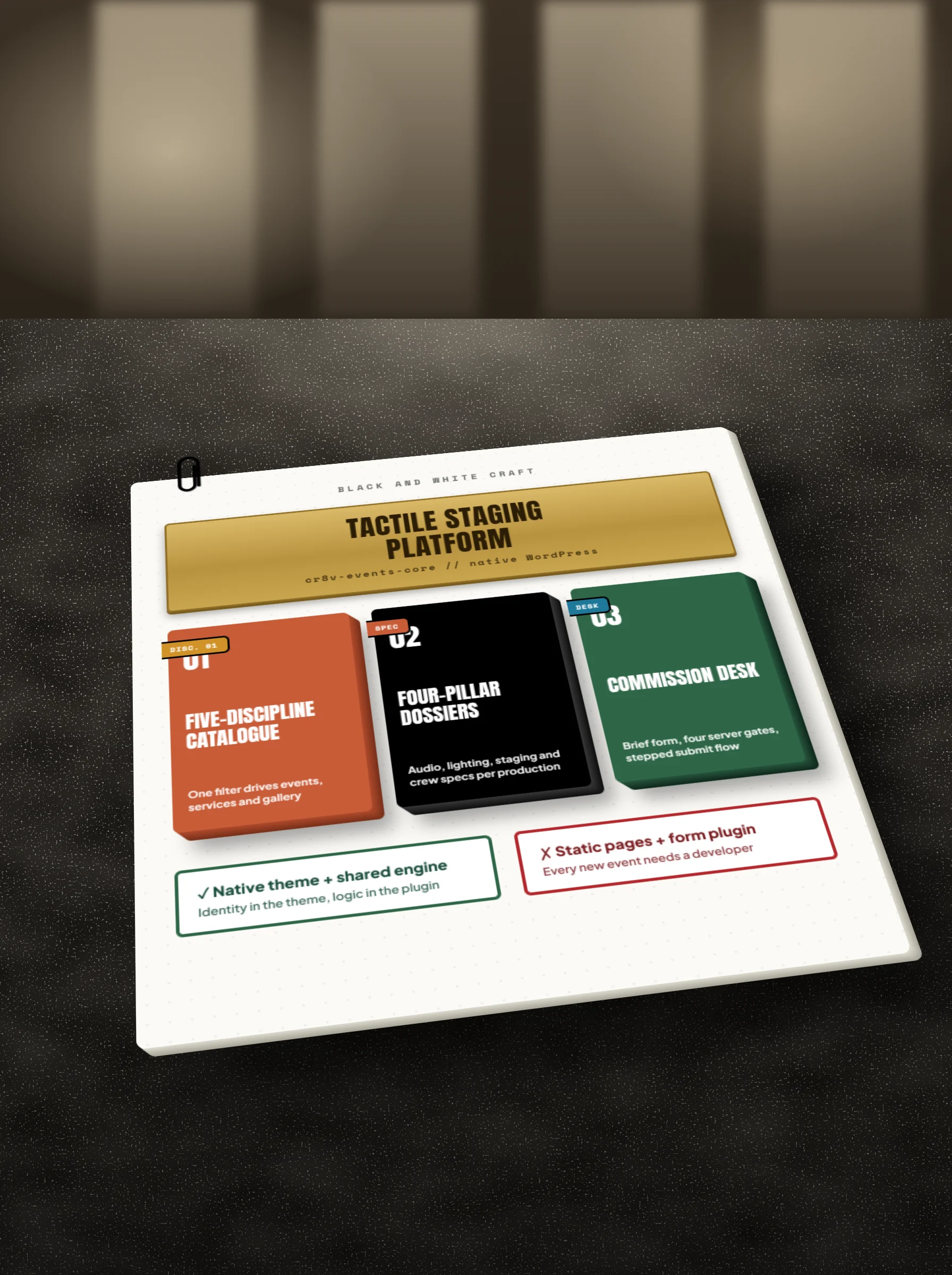
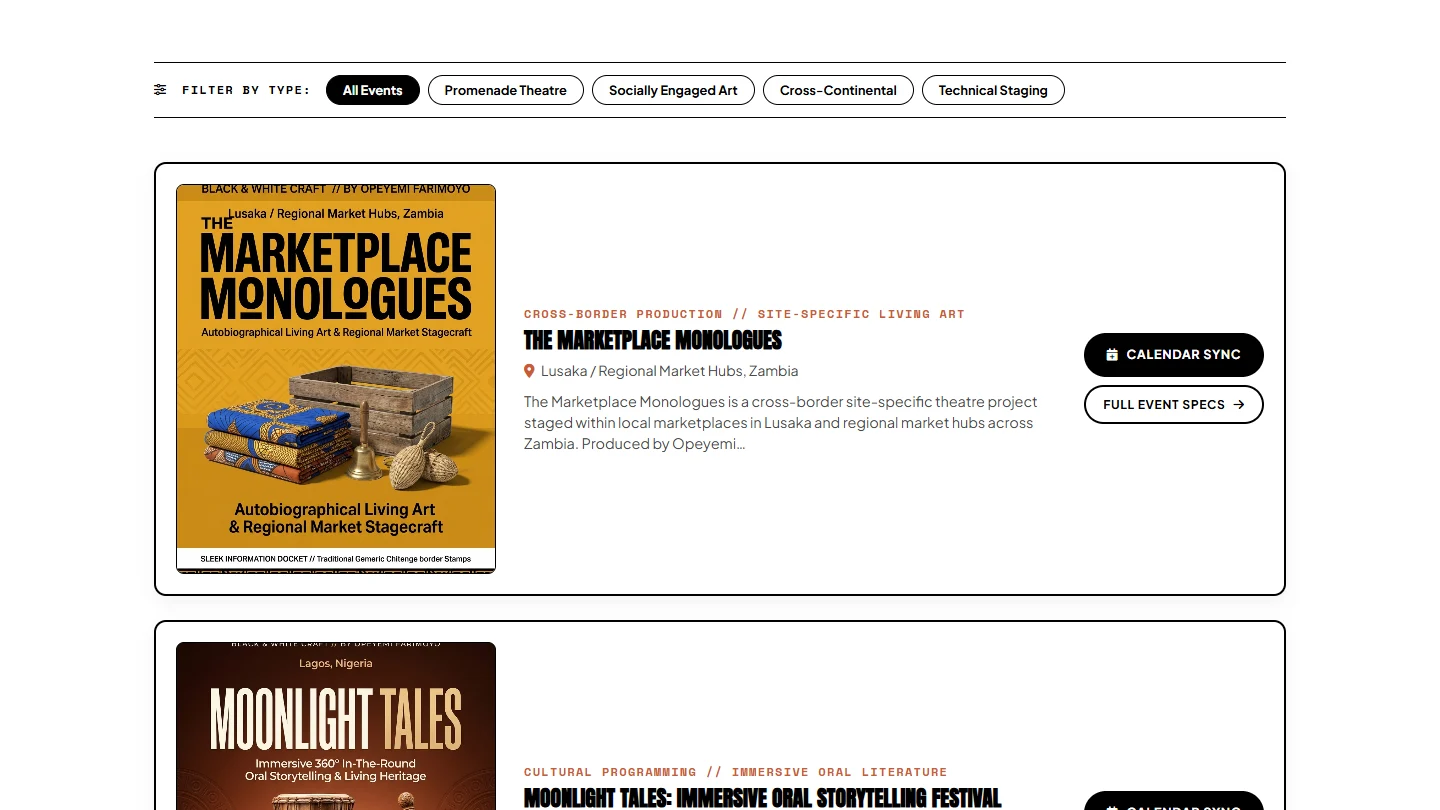
One filter model sorts events, services and gallery prints by discipline, so visitors browse the studio's work the way the studio describes it.
Every production carries audio, lighting, staging and crew specifications, edited in a studio screen and shown as a consistent dossier.
A brief form with a stepped submission flow feeds a four-stage inquiries pipeline, with dual HTML emails to the studio and the client.
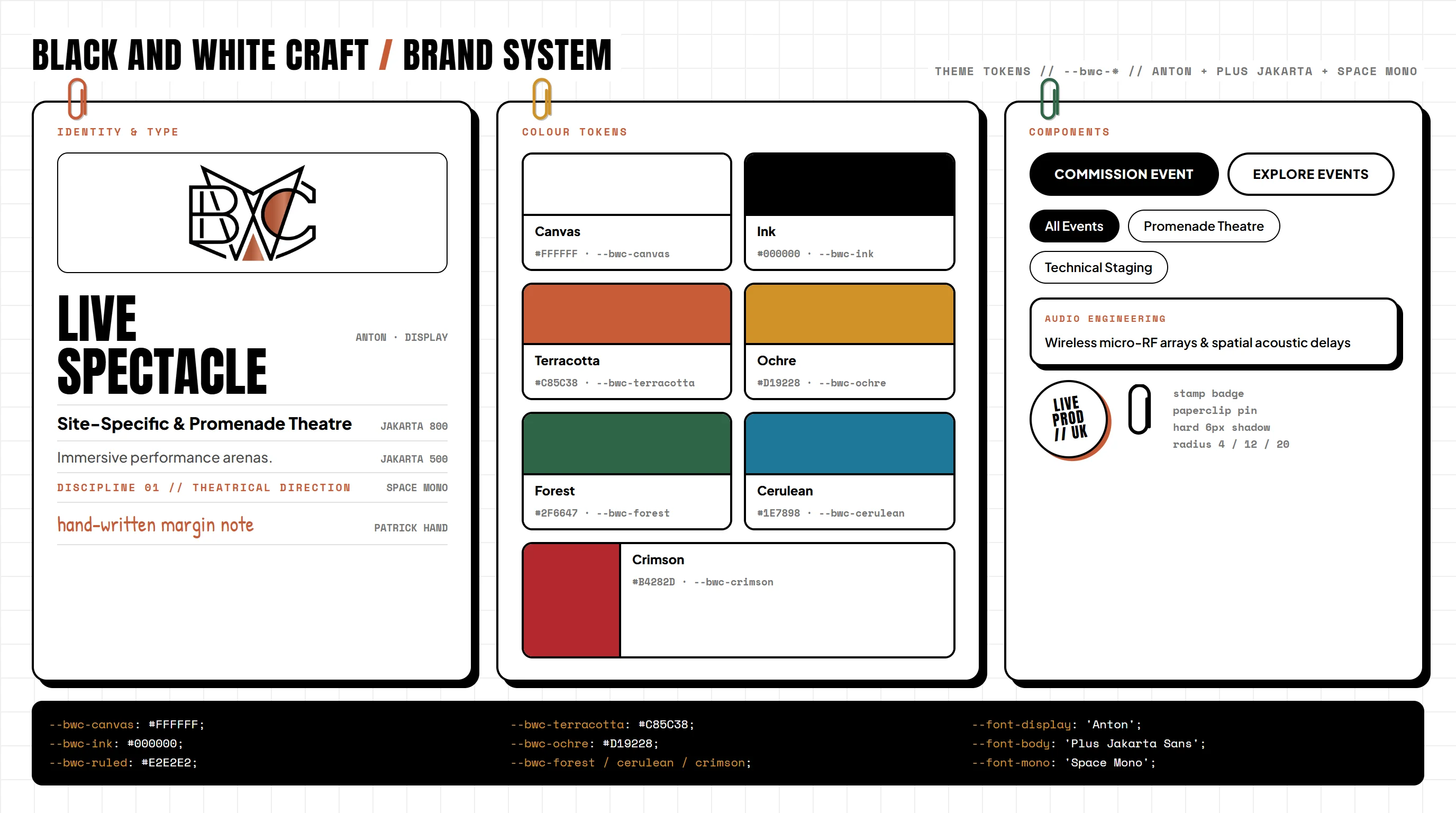
The tactile identity captured as a working system: Anton display type with Plus Jakarta Sans, Space Mono and a hand-written accent, a monochrome base with five earth-and-water accents, and the component language of filter pills, hard-shadow cards, paperclip pins and stamp badges, all mapped to the --bwc-* custom properties the theme ships with.

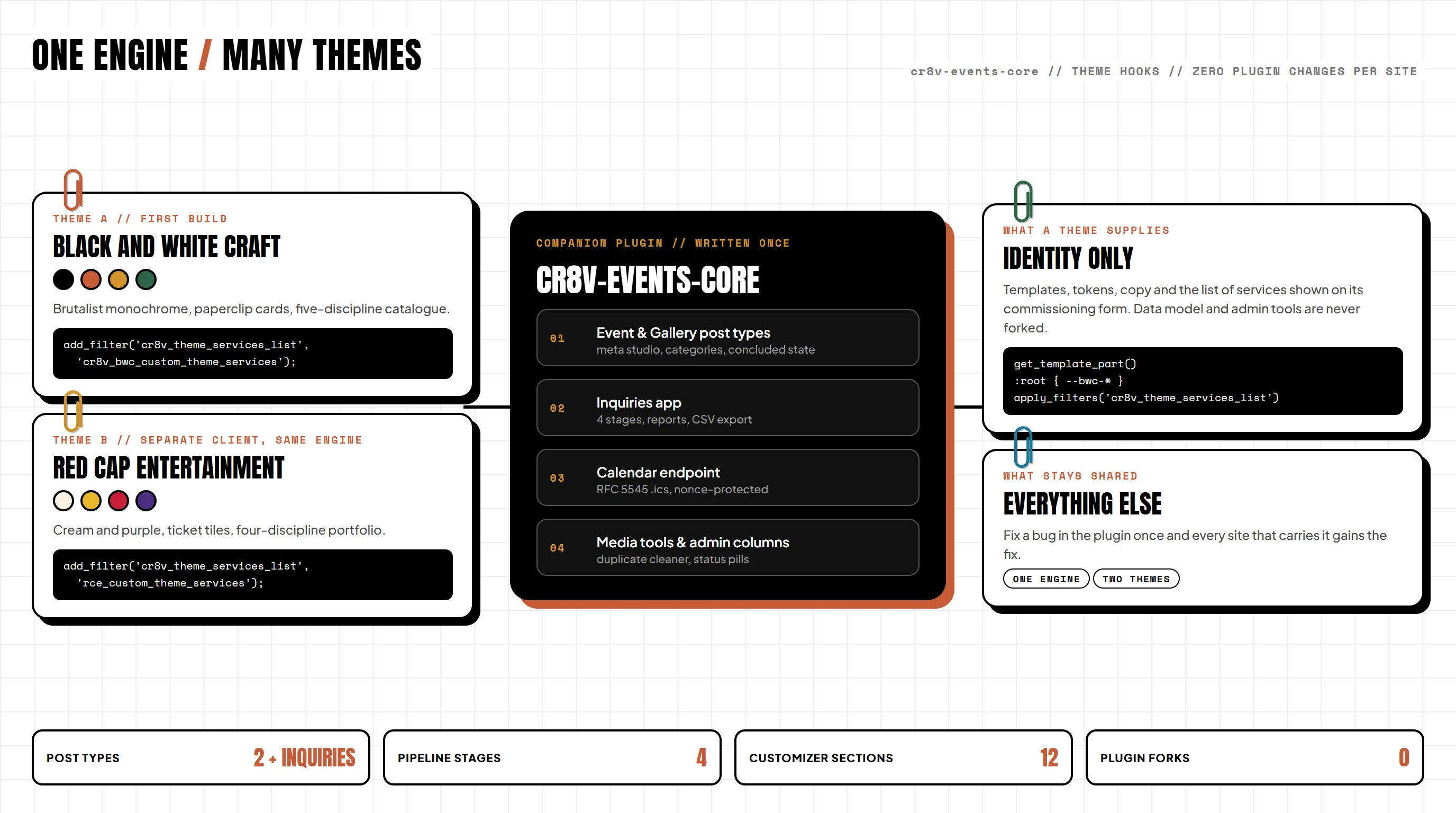
The architecture that made this site the origin of a reusable platform: a companion plugin written once, and themes that supply identity only (templates, tokens, copy and the services list) through hooks such as cr8v_theme_services_list.

The architecture board: three raised blocks carrying the whole public experience, mounted on a native theme with a shared engine behind it.

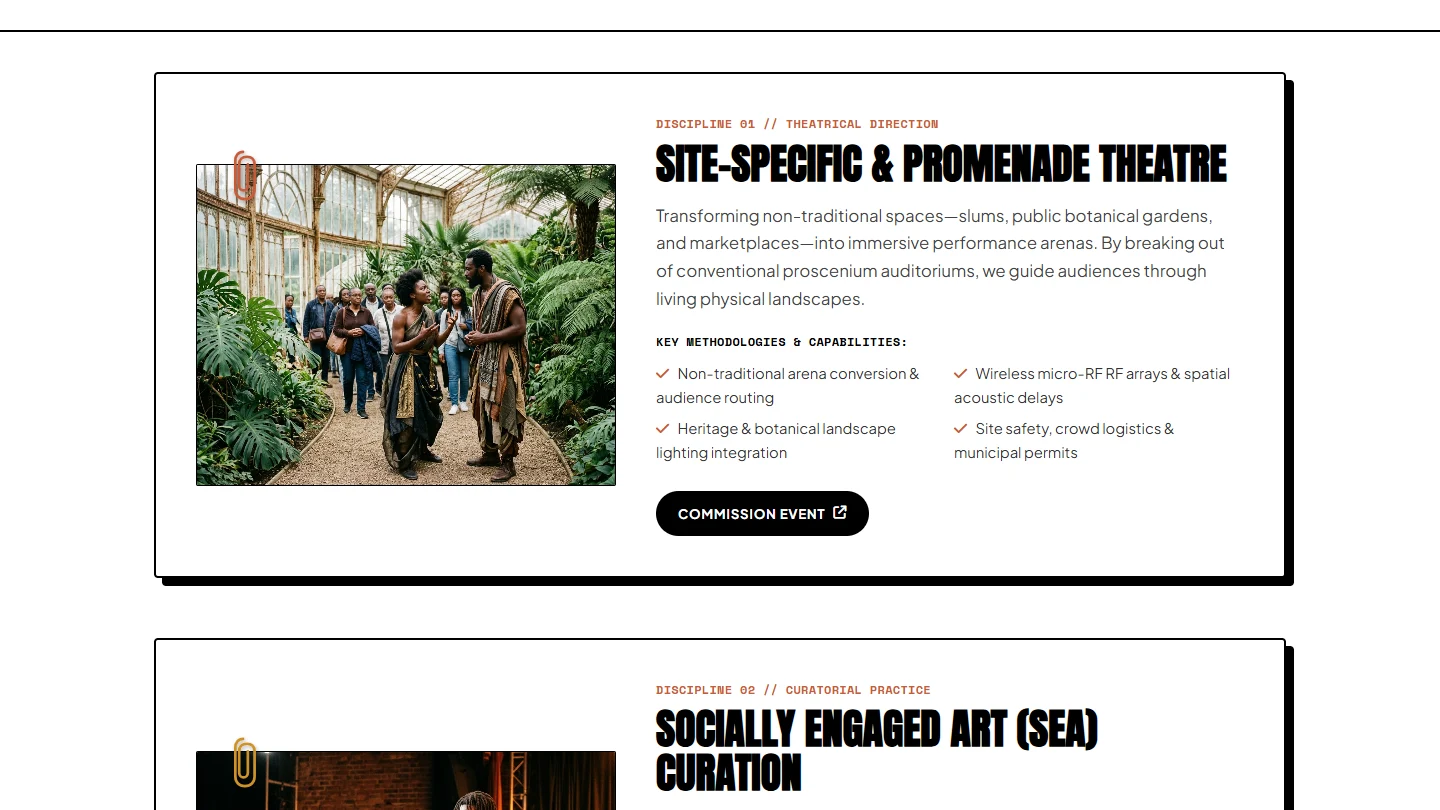
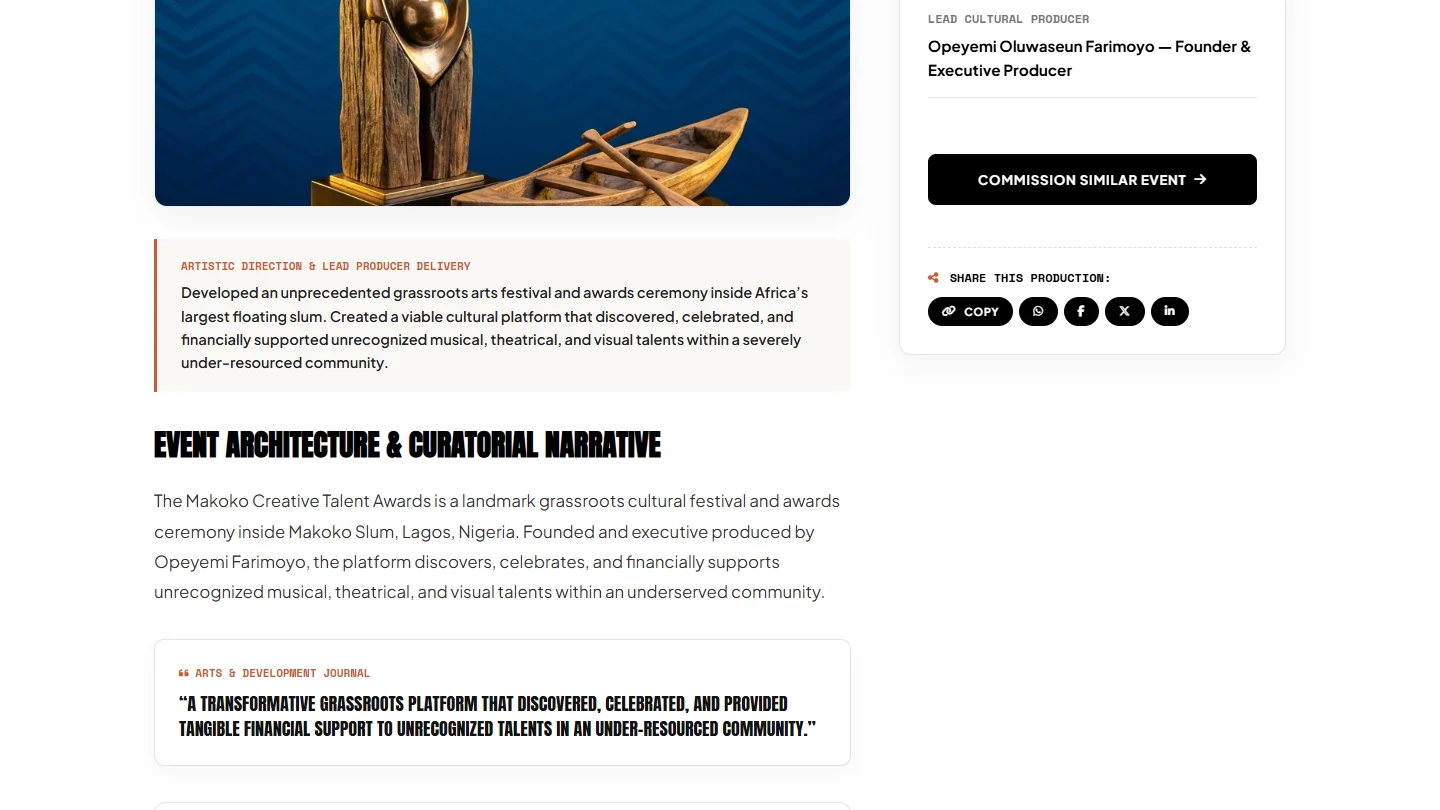
Scrolled captures of the live site beyond the hero: the production catalogue, the five disciplines, a single production dossier and the commissioning form.

Filter pills by discipline above full-width production cards: poster, kicker, venue and excerpt, with Calendar Sync and Full Event Specs actions.

One card per discipline with a photograph, a paperclip pin, a hard black shadow and a four-point list of key methodologies, each ending in a Commission Event action.

An artistic-direction callout, curatorial narrative and press quote, followed by the four-pillar technical specification, beside a sticky panel with the lead producer, a Commission Similar Event action and share buttons.

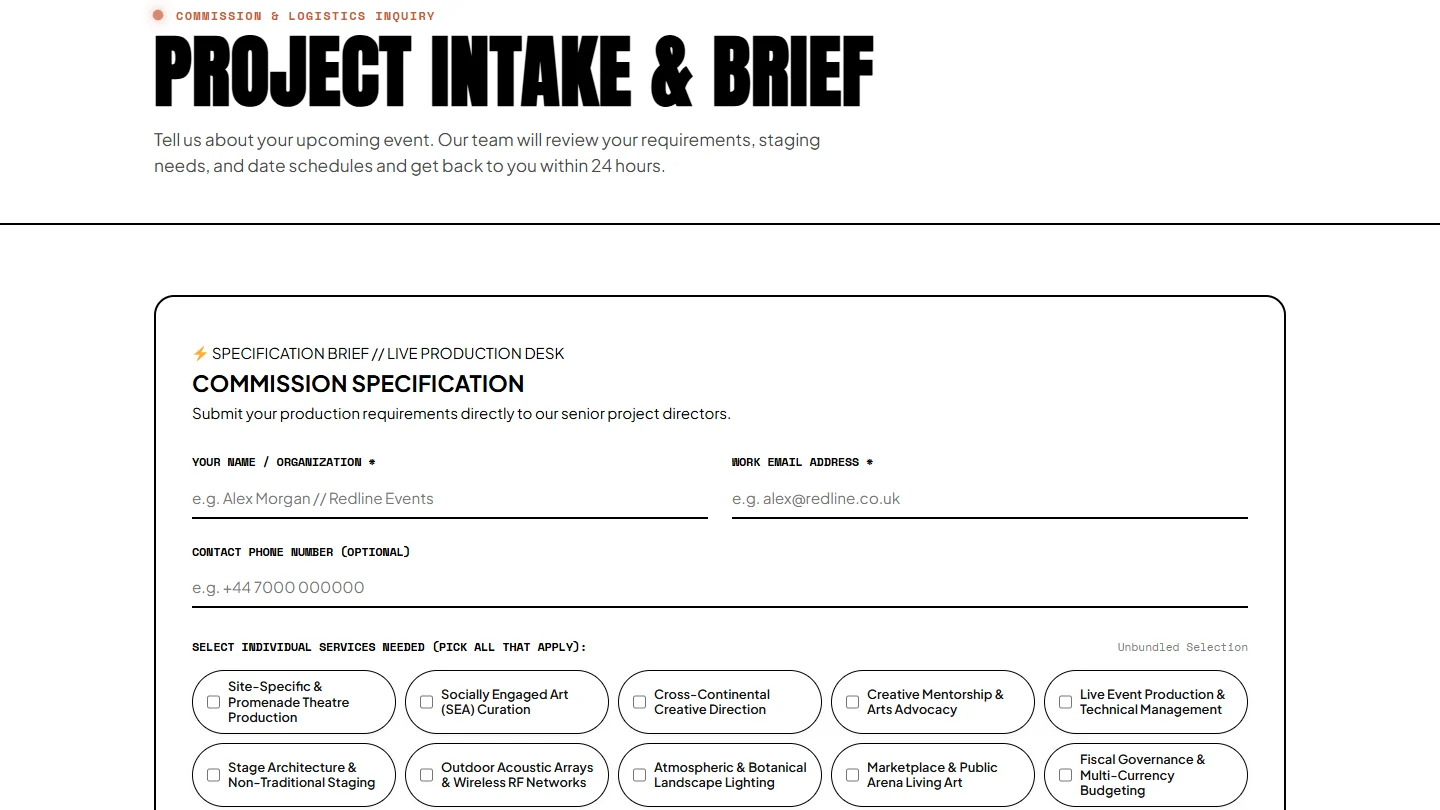
Name or organisation, work email, optional phone, ten rounded service pills and a project brief, promising a reply within 24 hours.
Six interactive recreations of the systems that make this site editable by the studio: the theme layer on top of the cr8v-events-core engine. Widgets use illustrative data with the real field names, hooks and stages.
How the front end feels: a commissioning flow that narrates every step of submission, a hero card that behaves like a pinned print, and a clip-and-ribbon system that carries the identity everywhere.
Visitors pick from ten rounded service pills and write a brief. On submit, a modal overlay walks through three steps (validating, saving, dispatching to the production desk) while the request runs, then confirms with the studio's 24-hour promise. Behind it sit the same four server-side gates as the Red Cap deployment: honeypot, two-second time gate, rate limit and nonce. Pick a few pills and transmit.
Two services are pre-selected. Press Transmit Brief to watch the submission flow.
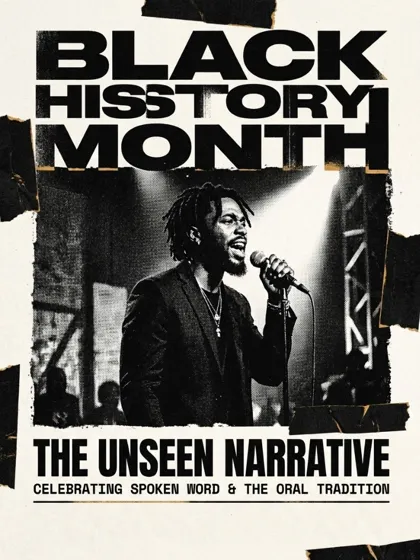
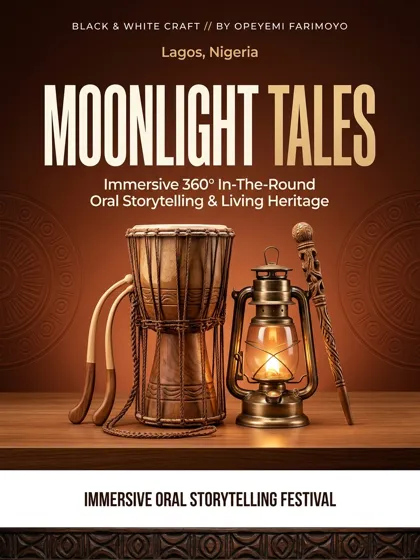
The home hero is a pinned print: a tilted card with a paperclip, a rotating stamp badge and a poster slider. It auto-advances; use the arrows or dots to take control.

The paperclip is the identity's signature. One accent token colours the clip on a discipline card, the ribbon pin on a gallery print and the stamp on a hero card, so the motif stays consistent everywhere. Pick an accent to recolour all three.
Nine code-level decisions behind the theme, each one distinct from the systems shown above. Pure typography and live code widgets, no screenshots.
Productions and gallery prints each get their own category taxonomy, so the discipline filters have real data behind them rather than hard-coded buttons.
Older productions stored specs as a label and value list. On read, label keywords decide which pillar each value belongs to. Type a legacy label.
One pre_get_posts filter decides how the catalogue pages are fetched, so every archive behaves the same way.
A late-priority template_include filter retires old URLs with a permanent redirect and forces key routes to the right template.
A print's span token maps to a column count on a twelve-column track, and its ribbon colour must be one of the brand accents.
Every page has its own Customizer section, with a Design Tokens section for the brand itself.
Black, white and a ruled grey carry the layout; five earth-and-water accents carry meaning.
The brand pairs checked against WCAG 2.1 thresholds. Ratios are computed in your browser from the actual hex values.
The mobile navigation is plain JavaScript: it opens from the toggle, closes from its own button, the overlay, any link, or the Escape key.